Sector Spotlight: Food Delivery

1st May - 13th July 2026

In this issue, we analysed 1,092 articles, tracked four leading food-delivery companies (Uber Eats, Just Eat, Grubhub, and DoorDash), and identified 10 key themes.

Market Snapshot

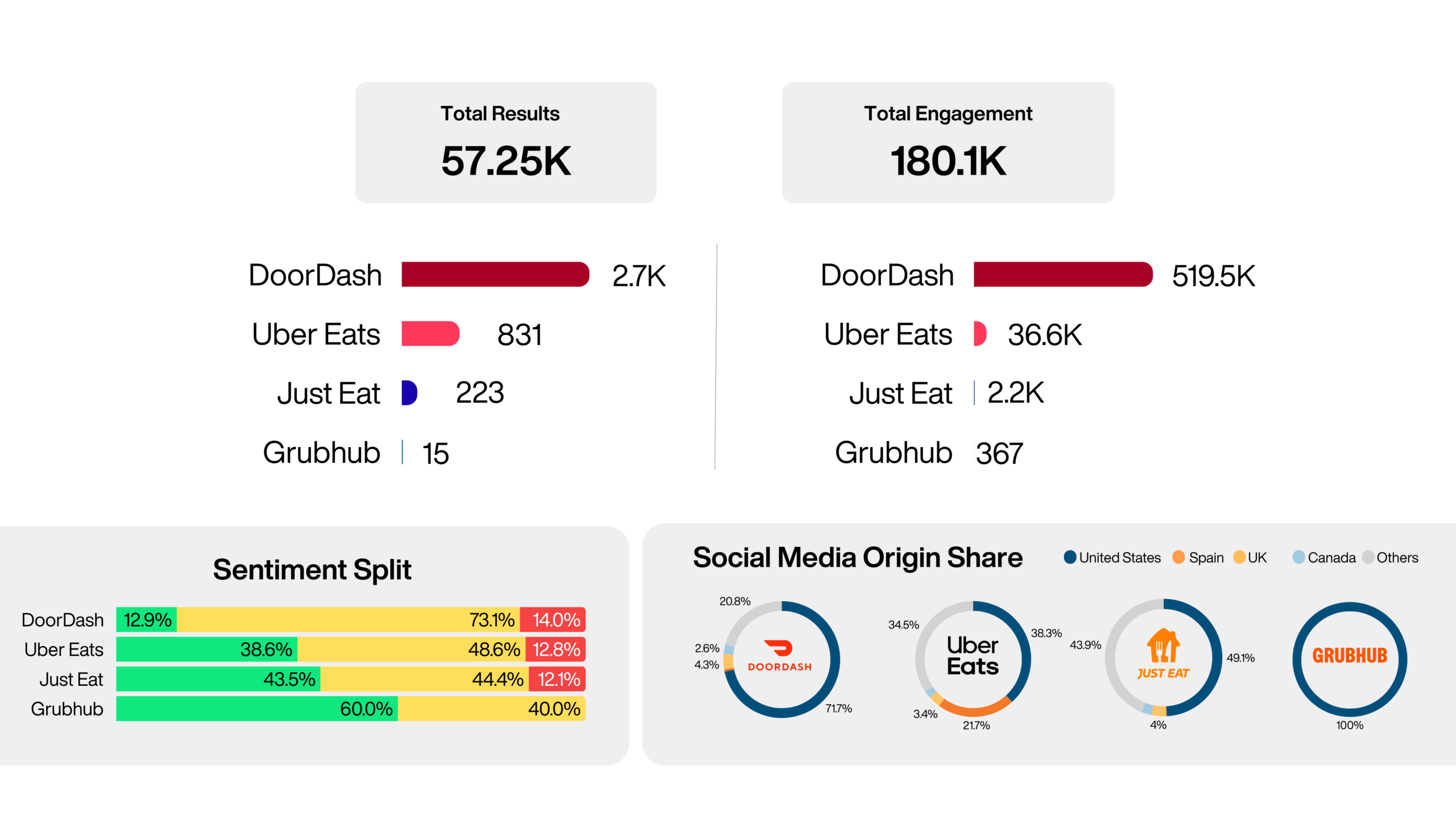
World Cup food-delivery coverage is led by promotional activity and match-day demand, with DoorDash dominating visibility ahead of Uber Eats, Just Eat and Grubhub.

The FIFA World Cup created a concentrated food-delivery conversation, driving media attention around match-day demand, late-night ordering, promotions, fan experiences and platform partnerships. As fans watched from home and retailers extended delivery hours, food-delivery brands were positioned as part of the tournament’s practical viewing infrastructure.

This report examines how DoorDash, Uber Eats, Just Eat and Grubhub featured within the World Cup conversation, highlighting the themes and activations that drove visibility. It also considers where coverage was brand-led or category-led, including promotions, membership ecosystems, celebrity marketing, supermarket partnerships and wider convenience services.

Social Media Overview

Food-delivery brands occupy distinct World Cup roles, from DoorDash’s high-engagement campaigns to Uber Eats’ culturally responsive activity and the more functional profiles of Just Eat and Grubhub.

  • DoorDash dominates social scale, with 2.7K results and 519.5K engagements. Conversation is driven by ticket drops, sweepstakes, fan-event partnerships and celebrity content, although 73.1% is neutral and some attention shifts to execution issues, ad disclosure and the Brooklyn Beckham controversy.
  • Uber Eats forms the clear second tier, with 831 results and 36.6K engagements. Conversation spans #NoInglés activations, delivery logistics, courier experiences and Gordon Ramsay advertising. Its 38.6% positive share is stronger than DoorDash’s, though criticism centres on fees, undelivered orders and convenience-led messaging.
  • Just Eat has a smaller but comparatively favourable pool, with 223 results and 2.2K engagements. Visibility is mainly driven by giveaways, supermarket delivery extensions and practical World Cup ordering, making its profile functional and category-led.
  • Grubhub records 60% positive sentiment, but this is based on only 15 results and 367 engagements. Conversation centres on deals, restaurant promotions and the Buffalo Wild Wings couch giveaway, so the result should be read cautiously.
  • The category is heavily promotion-led, but brand roles differ: DoorDash leads on campaign visibility, Uber Eats has the broadest cultural conversation, Just Eat is positioned around delivery utility, and Grubhub remains a niche home-viewing offer.

Macro Theme Map

World Cup food-delivery coverage is shaped by value-led promotions, broader convenience services and fan engagement, with match-day demand providing a strong but more functional supporting narrative.

Narrative Implications
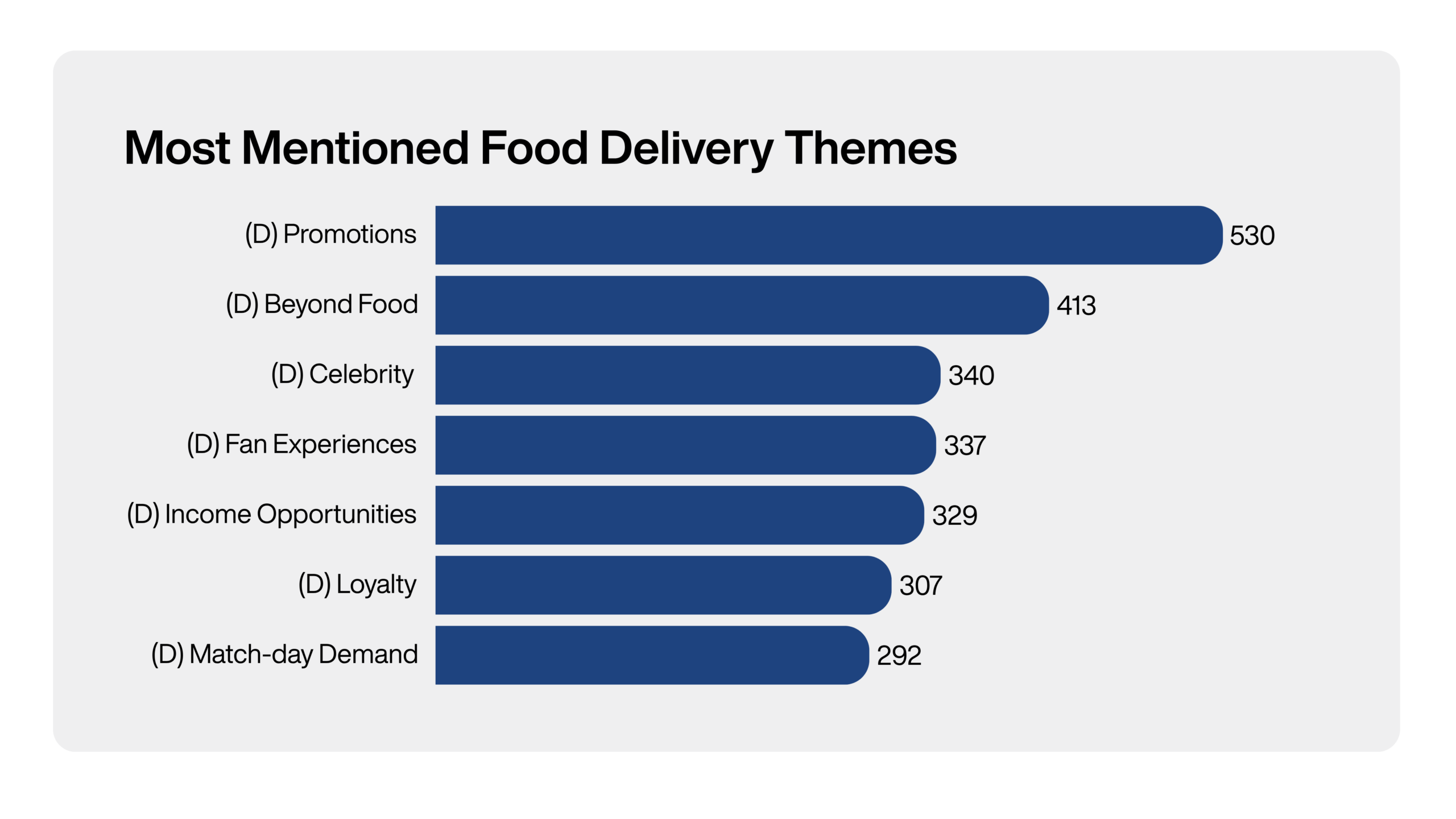
  • Promotions dominate the conversation, showing that discounts, giveaways, fee waivers and match-day bundles are the main route through which delivery brands build World Cup relevance.
  • Beyond Food is the second-largest theme, reflecting how platforms are being discussed through dining, mobility, gifting and other services that extend their role beyond restaurant delivery.
  • Match-day Demand is particularly important in the UK. With many fixtures taking place late at night local time, fans have watched more matches at home, extending ordering windows and increasing demand for late-night food, grocery and convenience delivery.
  • Celebrity and cultural marketing adds visibility, with humour, localised campaigns and recognisable personalities creating shareable moments. However, these activations can also introduce reputational pressure when controversy overshadows the core brand message.
  • Fan Experiences reinforces an access narrative, with ticket giveaways, fan hubs, watch-party activations and home-viewing prizes positioning delivery platforms as facilitators of tournament participation.
  • Income Opportunities reflects wider category conversation, particularly around courier earnings, side gigs and tournament-related demand. This is largely category-led rather than owned by individual brands.
  • Loyalty provides the functional backbone, linking subscriptions, rewards and app incentives with larger baskets, repeat ordering and wider ecosystem use.
  • Overall, the sector is positioned as part of the at-home World Cup viewing infrastructure, with late UK kick-offs creating a clear commercial uplift for delivery platforms.

So, how do these big food-delivery themes play out for each brand?

DoorDash - Top Online Media Themes

DoorDash’s World Cup profile is driven by value-led promotions, fan access and DashPass benefits, with celebrity campaigns adding visibility but also some reputational exposure.
Online Newspaper Readout

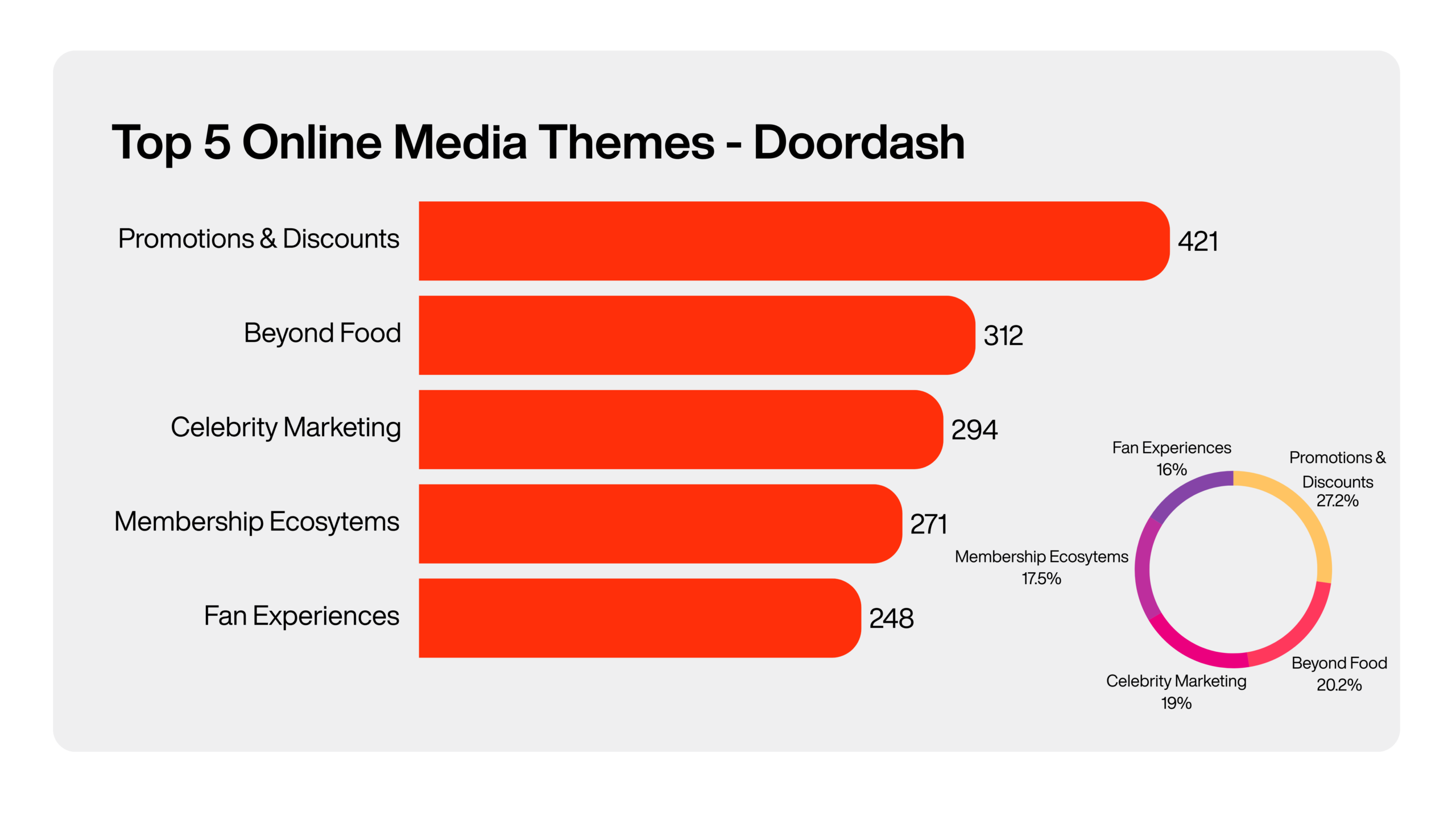
  • DoorDash’s online media profile is led by Promotions & Discounts, with 421 mentions, making value-led engagement the clearest route into its World Cup coverage. Its “Pick the Champion” activation offers eligible US DashPass members a share of $5 million in DoorDash credits, giving the campaign significant scale while encouraging app participation and repeat engagement. (DoorDash)
  • Beyond Food is the second-largest theme, with 312 mentions, indicating that DoorDash’s role extends beyond delivery into wider fan access and mobility. DoorDash helped offset 35% of NJ Transit’s World Cup ticket costs, reducing the fare to $98 and positioning the brand within the tournament’s practical infrastructure. (NJ Transit)
  • Celebrity Marketing accounts for 294 mentions, adding visibility through recognisable personalities, football humour and culturally relevant campaign moments. Zlatan Ibrahimović’s campaign used his outspoken persona to create shareable content around losing teams, while the T-Pain and Tim Payne mix-up generated viral attention despite being a coordinated marketing stunt. The oversized “Pizza Crouch” activation, inspired by Peter Crouch, further used football celebrity and novelty to connect the brand with match-day food culture. However, the Brooklyn Beckham advert introduced reputational pressure, with coverage focusing on family controversy and suggesting that the celebrity narrative at times overshadowed their core delivery and sponsorship message.
  • Membership Ecosystems, with 271 mentions, shows DashPass operating as the central platform connecting ticket giveaways, delivery benefits, credits and mobility discounts. This suggests the sponsorship is being used to strengthen the perceived value of membership, rather than relying on isolated promotional activity.

Social Media Readout

  • DoorDash’s social conversation is campaign-led and fan-access-focused, centred on ticket drops, sweepstakes, billboards and fan-event partnerships across key host cities.
  • Positive conversation is driven by ticket access, stadium experiences and food-led activations. Location-based contests and DashPass promotions position DoorDash as a facilitator of tournament participation.
  • Neutral coverage mainly explains campaign mechanics, including ticket distribution and scavenger hunt-style activations, alongside reporting on celebrity advertising and food-vendor partnerships.
  • Celebrity content creates visibility but also reputational exposure. Brooklyn Beckham’s “It’s Complicated” advert shifted attention from DoorDash’s sponsorship role towards his family estrangement.
  • Negative conversation centres on execution and transparency. The T-Pain and Tim Payne tagging error became a shareable PR misstep, while users also questioned ad disclosure.

Representative Headlines

World Cup gives London restaurants and retailers Deliveroo boost – CITY AM

T-Pain Has Hilarious Reaction After DoorDash Seemingly Mistook Him for World Cup Player Tim Payne – E NEWS

Uber Eats - Top Online Media Mentions

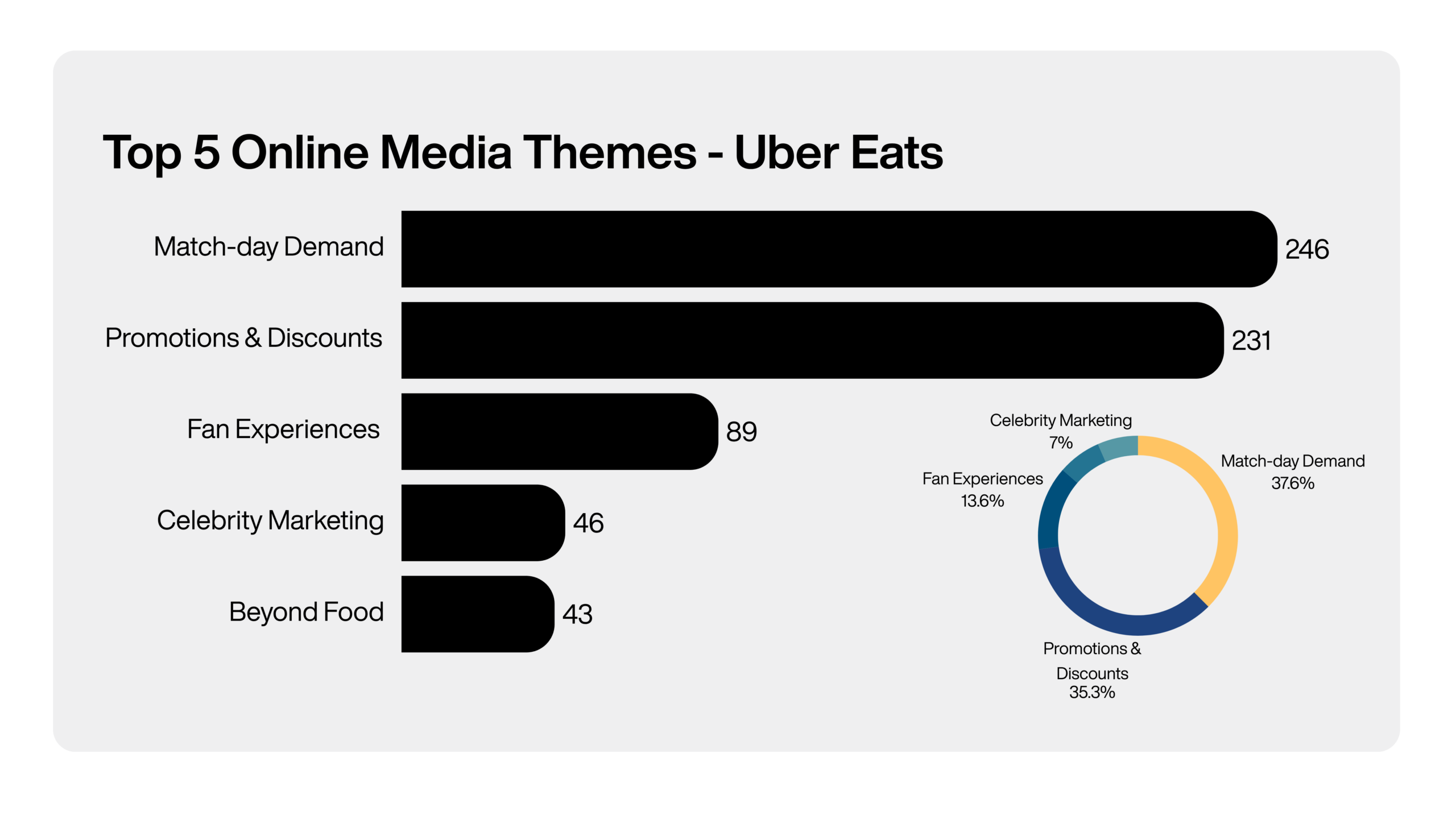
Uber Eats’ World Cup profile is led by match-day demand and value-led promotions, with fan experiences and celebrity activity providing smaller supporting narratives.
Online Newspaper Readout

  • Match-day Demand leads Uber Eats’ online media profile, with 246 mentions, positioning the brand around late-night ordering and changing food habits during World Cup fixtures. Wider UK data supports this demand opportunity, with app traffic rising 169% before England’s early-hours match against Mexico. While category-level rather than Uber Eats-specific, the figure indicates how late kick-offs expand the delivery occasion. (The Guardian)
  • Promotions & Discounts follow closely, with 231 mentions, showing that value-led engagement is another major route into the tournament conversation. Uber Eats’ Dine Out offer in the US allows users to earn 30% Uber Cash, up to $35 per meal, while in the UK, Wendy’s limited-edition gold-whistle giveaway connects ordering with prize-led fan engagement. (The Points Guy)
  • Fan Experiences, with 89 mentions, centres on Uber Eats’ role in physical supporter spaces. The Uber Eats Canada Soccer House in North Vancouver extends the brand beyond delivery into live screenings, entertainment and communal fan participation.
  • Celebrity Marketing accounts for 46 mentions, adding visibility through recognisable personalities and culturally localised campaigns. Gordon Ramsay’s commercial positioned delivery as part of the match-viewing occasion, while the temporary “Uber Come” rebrand connected Uber Eats with Mexican football humour and national pride.
  • Beyond Food, with 43 mentions, shows Uber Eats being discussed as a broader dining and technology platform. Dine Out reservations, receipt-based rewards and its AI assistant position the app around restaurant discovery, personalisation and convenience rather than delivery alone.

Social Media Readout

  • Uber Eats’ positive conversation is mainly activation-led, with playful Mexico-focused campaigns around #NoInglés, alongside food promotions and fan-event partnerships.
  • Neutral conversation is more operational and informational, focusing on delivery logistics, courier experiences and the impact of World Cup demand on local businesses. Uber Eats is often discussed as part of the wider delivery category rather than through a distinctive brand-led narrative.
  • Negative conversation centres on fees, undelivered orders and perceived overreliance on takeaway services during the tournament. Gordon Ramsay’s Uber Eats advertisement also attracted criticism for appearing to encourage convenience over home cooking.
  • Wider concerns around World Cup affordability, tourism pressure and exploitation appear in the conversation, but these are largely event-led rather than specific to Uber Eats.

Representative Headlines

Uber Eats taps Gordon Ramsay to tell football fans to stop cooking – QSR Media

Asda extends late-night delivery hours during the World Cup – The Grocer

Just Eat - Top Online Media Themes

Just Eat’s World Cup profile is led by late-night demand and value-led promotions, with supermarket partnerships reinforcing its role as a practical convenience platform beyond takeaway.
Online Newspaper Readout

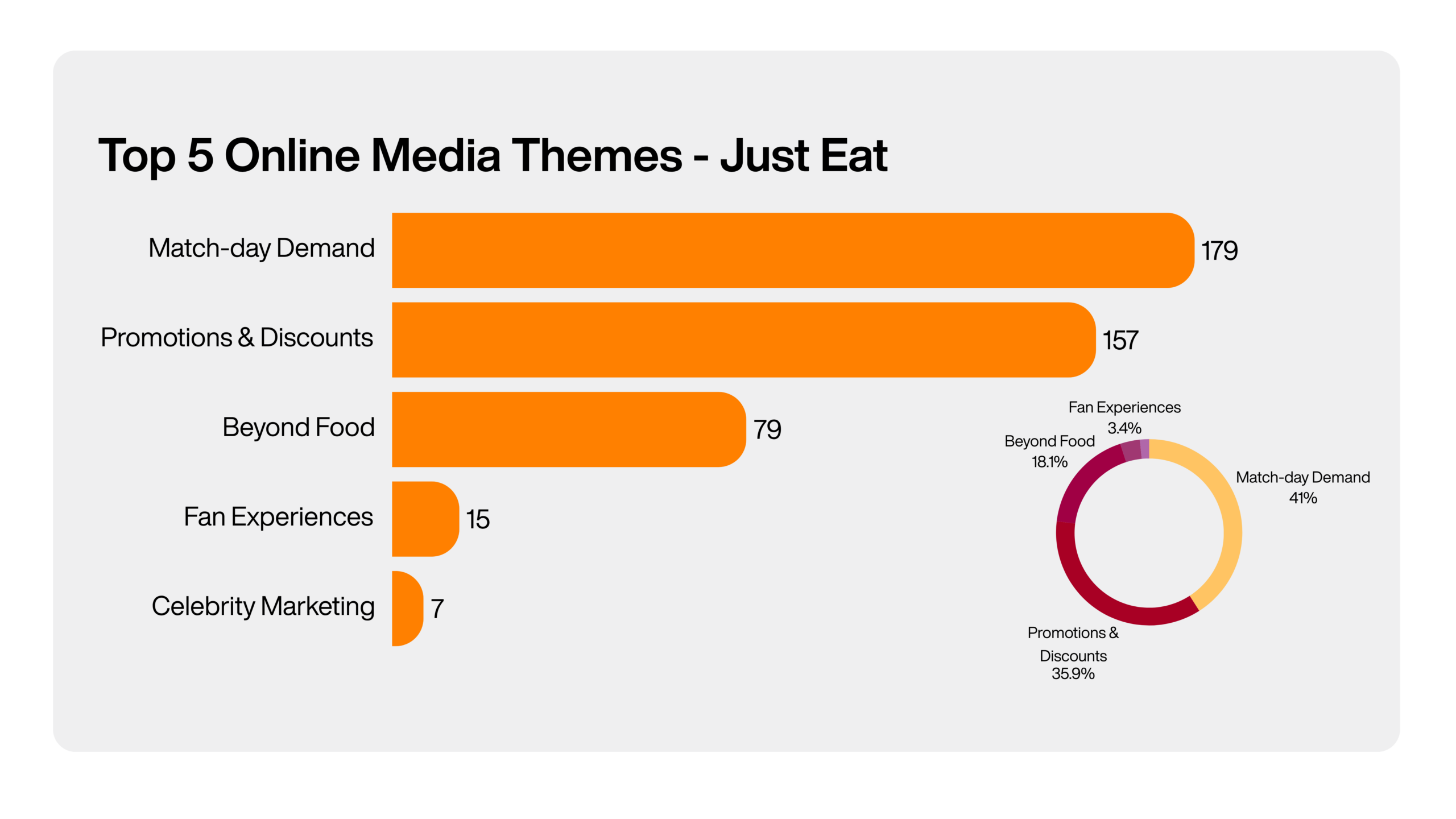
  • Match-day Demand leads Just Eat’s online media profile, with 179 mentions, positioning the brand around changing food habits and increased demand during late-night World Cup viewing. In the UK, Co-op extended delivery hours to 1am across around 130 stores for England’s quarter-final, with orders available through Just Eat, Uber Eats and Deliveroo, while forecasting beer, lager and cider sales to rise by nearly 50% week on week. Asda also extended delivery cut-offs to 11pm or midnight across 188 stores, including Just Eat-specific match-day and breakfast discounts, while Waitrose expanded late-night delivery across more than 50 stores, with some operating 24/7 after tournament orders rose 17%. Together, this coverage positions Just Eat as part of the retail infrastructure supporting late-night home viewing, rather than solely a restaurant takeaway platform. (The Sun)
  • Promotions & Discounts follows with 157 mentions, showing that value-led engagement is another major route into the conversation. In the UK, match-day bundles, discounts of up to 50% on selected Asda products through Just Eat, and Wendy’s limited-edition gold-whistle giveaway position the platform around convenient, prize-led ordering for shared viewing occasions. (The Sun)
  • Beyond Food accounts for 79 mentions, reflecting Just Eat’s growing relevance in grocery, drinks and convenience delivery. Media coverage of supermarket partnerships reinforces its role in helping retailers respond quickly to tournament-driven demand and extend trading beyond normal delivery windows.
  • Fan Experiences and Celebrity Marketing remain limited, with 15 and 7 mentions respectively. This suggests Just Eat’s World Cup profile is driven more by functional utility and retailer partnerships than by distinctive experiential or personality-led campaigns.

Social Media Readout

  • Just Eat’s positive conversation is primarily promotion-led, with World Cup giveaways using cash and voucher prizes to drive likes, tags and comments. The brand is often discussed alongside McDonald’s and Uber Eats, making the activity more category-led than distinctly owned by Just Eat.
  • Neutral conversation is largely informational and event-led, spanning match discussion, retail activity and extended delivery services. Coverage of supermarkets such as Waitrose expanding delivery during the tournament supports Just Eat’s relevance as a practical convenience platform.
  • Negative conversation is dominated by wider World Cup issues, including ticketing problems, media criticism, visa concerns and political debate. These themes are not directly linked to Just Eat, suggesting limited brand-specific reputational exposure.

Representative Headlines

Just Eat predicts 40% surge in breakfast orders as UK braces for late-night games – Real Times

Pubs, punters and pizza boxes: World Cup set to deliver £3.8bn windfall for British business – Business Matters

Grubhub - Top Online Media Themes

Grubhub’s World Cup profile is promotion-led and home-viewing focused, with weekly deals, larger-order incentives and novelty prizes driving engagement, but limited distinctive traction beyond value.
Online Newspaper Readout

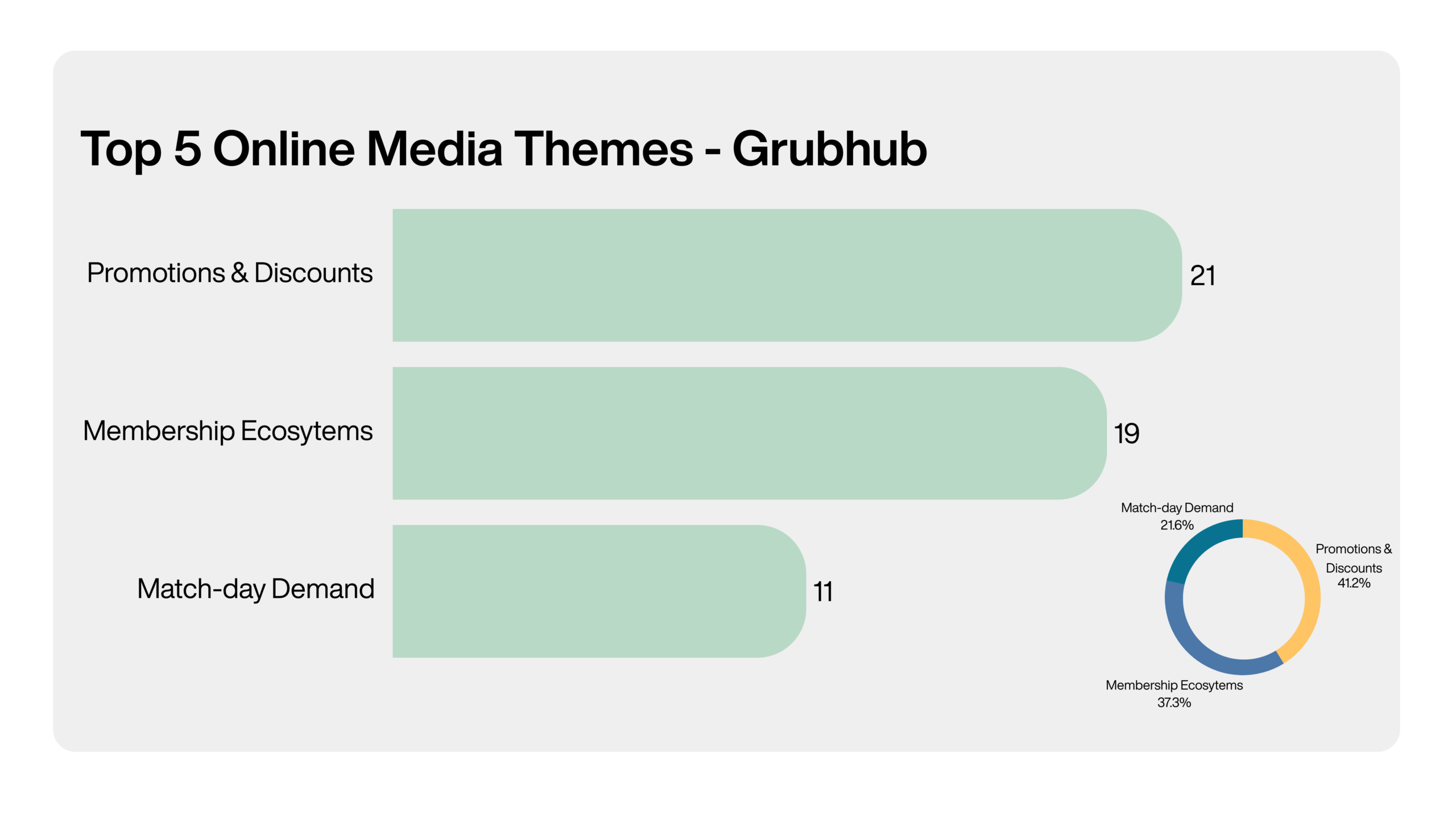
  • Promotions & Discounts leads Grubhub’s online media profile, with 21 mentions, accounting for 41.2% of the theme mix. Its three-week World Cup programme includes more than 10 offers across a broad restaurant network, positioning Grubhub around sustained value-led engagement rather than a single promotional moment. (Yahoo)
  • Membership Ecosystems follows with 19 mentions, or 37.3%. eGift cards and app-based incentives extend Grubhub’s role into gifting and stored value, although coverage remains closely connected to discounts rather than a distinctive loyalty proposition.
  • Match-day Demand accounts for 11 mentions, linking Grubhub to larger restaurant orders and home-viewing occasions. Waived delivery and service fees on orders above $50 indicate a focus on group orders and watch-party baskets. (Delish)
  • The Buffalo Wild Wings “Side of Couch” activation adds a more distinctive fan-experience layer, giving customers spending at least $35 the chance to win a Lovesac couch. This connects Grubhub with living-room viewing, comfort and match-day food culture. (Food Network)
  • Overall, Grubhub is positioned as a promotion-led home-viewing platform, using a wide restaurant network, larger-order incentives and novelty prizes to drive repeat engagement across the tournament.

Social Media Readout

  • Grubhub’s positive conversation is mainly promotion-led and home-viewing focused, with World Cup deals, restaurant offers and the Buffalo Wild Wings couch giveaway driving visibility.
  • A secondary conversation links the tournament to delivery-driver earnings and gig-economy opportunities, although Grubhub is often mentioned alongside other platforms rather than through a distinctive brand-led narrative.
  • Neutral conversation centres on deal information, including World Cup offers, Fourth of July promotions, free delivery and reduced service fees. Wider tournament scheduling and restaurant content also contribute to an informational profile.
  • No meaningful negative theme was identified. However, this should be read cautiously because Grubhub has the smallest social conversation pool, limiting the strength of any sentiment conclusion.

Representative Headlines

Grubhub, Uber Eats offer World Cup delivery specials – including couches – Chain Storage

Grubhub is offering celebration-worthy BOGO deals for July 4th and beyond – Timeout

Let’s continue the conversation.

This report provides a snapshot of how leading food-delivery brands are using the FIFA 2026 World Cup to shape media narratives and visibility.

This report analyses online media coverage from North America and the UK between 1 May 2026 and 13 July 2026. The dataset includes articles where the World Cup is mentioned in the headline and features as a prominent topic within the coverage. Analysis focuses on coverage volume, sentiment, engagement and key narrative themes across relevant brand and tournament mentions.

For organisations looking to understand the full communications impact of major events, from sponsorship ROI and narrative performance to spokesperson influence and campaign effectiveness, CARMA helps brands understand how sponsorship translates into narrative dominance, reputation impact and commercial influence.

To learn more about how we can support your communications and marketing strategy, please contact Michael Simpson (UK & US) or Shirin Pervez (MENA).

Edition 5:
Food Delivery

Download the full analysis as a PDF Report!